10 TypeScript Best Practices for Scalable Apps

TLDR:
Scalable frontend applications require more than just adding types to JavaScript. This in-depth guide explores 10 essential TypeScript best practices—from strict configuration and advanced typing patterns to architectural alignment with Feature-Sliced Design—helping teams reduce technical debt, improve maintainability, and confidently scale complex frontend systems.
TypeScript best practices have become a non-negotiable requirement for teams building large-scale frontend applications, where weak type systems often lead to fragile abstractions and costly refactors. As applications grow, maintaining type safety, architectural boundaries, and developer velocity becomes increasingly difficult without discipline. This is where a structured methodology like Feature-Sliced Design (FSD) from feature-sliced.design complements TypeScript by providing architectural clarity, modularity, and long-term scalability.
Why Type Safety Is the Foundation of Scalable Frontend Systems
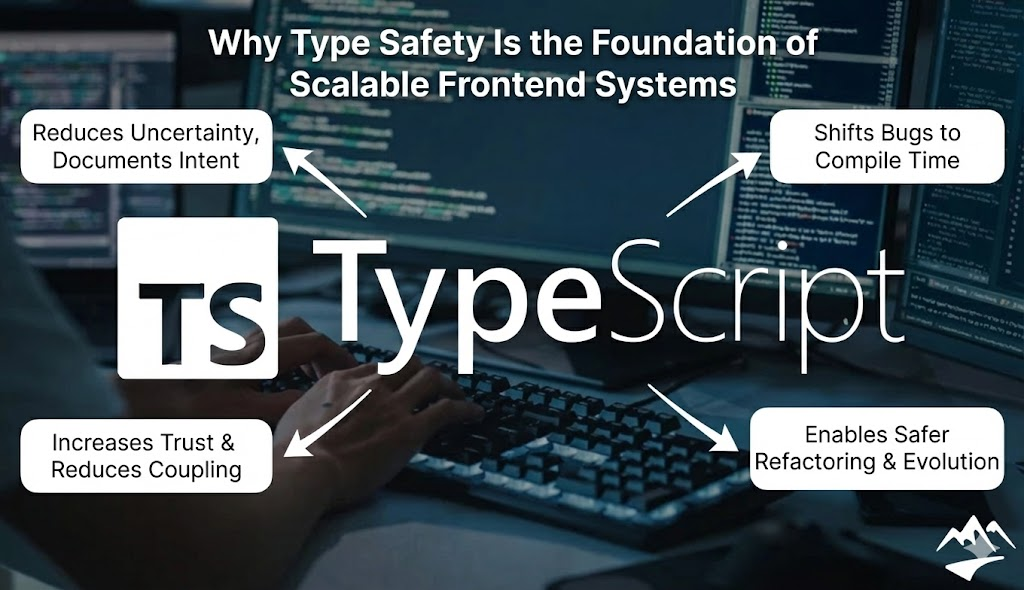
A key principle in software engineering is that scalability is not just about performance—it is about change. TypeScript exists to make change safer. Strong typing reduces uncertainty, documents intent, and shifts entire classes of bugs from runtime to compile time.
In large teams, the absence of strict type guarantees increases coupling and erodes trust in the codebase. Developers start relying on tribal knowledge instead of contracts. Over time, this leads to defensive programming, excessive runtime checks, and a slowdown in delivery.
TypeScript’s real power emerges when it is treated not as “JavaScript with types,” but as a design tool. When combined with architectural constraints—such as public APIs, clear boundaries, and isolated domains—it enables systems that are easier to evolve, refactor, and reason about.
Best Practice 1: Enable Strict TypeScript Configuration Early
One of the most common mistakes teams make is adopting TypeScript without enabling strictness. This undermines its entire purpose.
A scalable application should treat tsconfig.json as an architectural contract. Enabling strict options enforces correctness and consistency across teams.
Key settings to enable:
strict: truenoImplicitAnystrictNullChecksnoUncheckedIndexedAccessexactOptionalPropertyTypes
These options surface ambiguity early. While the initial friction may feel high, teams consistently report faster onboarding and fewer regressions once strict mode becomes standard.
From an architectural perspective, strict configuration increases cohesion and reduces accidental coupling between modules—especially when combined with explicit public APIs as encouraged by Feature-Sliced Design.
Best Practice 2: Prefer Explicit Types Over Implicit Inference at Boundaries
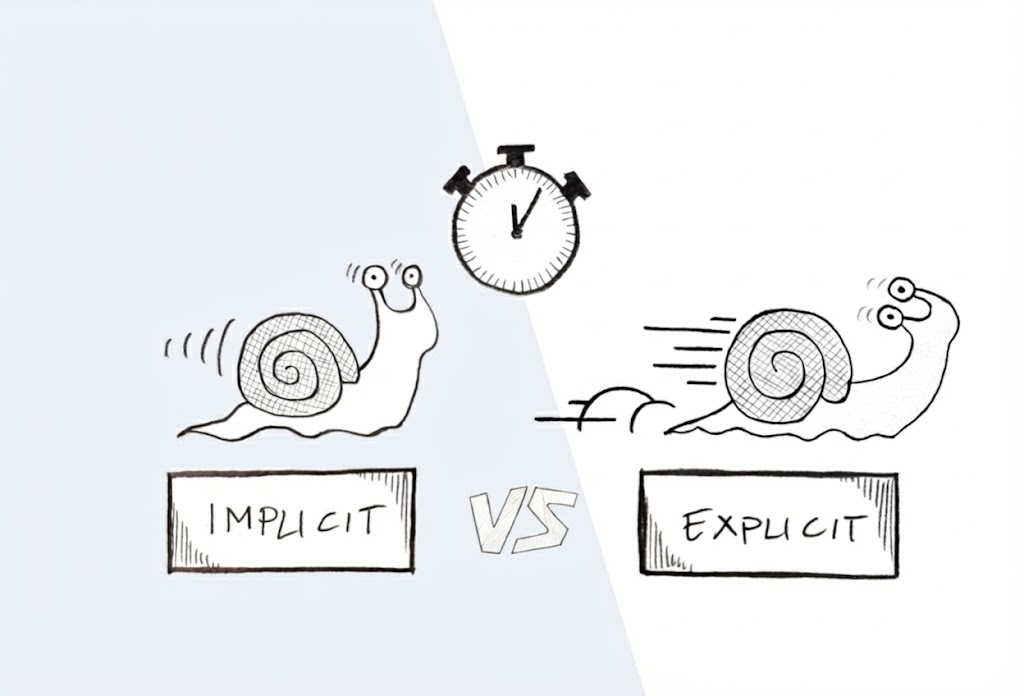
Type inference is one of TypeScript’s strengths, but relying on it everywhere is a scalability trap.
Within implementation details, inference improves readability. At module boundaries, however, explicit typing is critical. Boundaries are where contracts matter.
Examples of boundaries include:
- Public functions
- Feature APIs
- Entity models
- External integrations
- Shared utilities
Explicit types at boundaries act as documentation, stabilize refactors, and prevent cascading changes across the system. In FSD, this aligns directly with the concept of a public API (index.ts), where exported types define what other layers are allowed to depend on.
Best Practice 3: Model the Domain, Not the UI
Scalable applications fail when types mirror UI components instead of business concepts.
A robust type system models what the application is, not how it is rendered. This is where TypeScript and Domain-Driven Design naturally intersect.
For example, instead of typing API responses directly in components, define domain entities:
- User
- Order
- Product
- Session
- Permission
These entities live independently of frameworks and UI layers. In Feature-Sliced Design, they belong to the entities layer and serve as the backbone of the system.
This approach improves reusability, reduces duplication, and ensures that business logic does not leak into presentation concerns.
Best Practice 4: Use Utility Types as Building Blocks, Not Shortcuts
Advanced TypeScript shines through utility types such as Partial, Pick, Omit, Required, and Readonly. However, misuse can degrade clarity.
The goal is not brevity, but intent. Overusing nested utility types often obscures meaning.
A better approach is to compose named types from utility types:
- Define intent-driven aliases
- Centralize shared transformations
- Avoid inline complexity
This improves readability and makes the type system approachable for new contributors. Leading architects suggest that readable types are as important as readable code.
Best Practice 5: Leverage Discriminated Unions for State Modeling
Scalable applications inevitably manage complex states: loading, success, error, empty, partial, optimistic.
Discriminated unions provide a type-safe, expressive way to model these states without relying on booleans or ad-hoc flags.
By encoding state transitions into the type system, you eliminate impossible states and simplify logic. This dramatically improves maintainability in asynchronous flows such as data fetching, mutations, and background processes.
In Feature-Sliced Design, this pattern fits naturally within features, where user interaction scenarios require clear state transitions.
Best Practice 6: Avoid any and Prefer unknown With Refinement
The any type is effectively an escape hatch from TypeScript. In scalable systems, it is technical debt.
When interacting with untyped data—such as third-party APIs or dynamic inputs—use unknown instead. This forces explicit validation and refinement before usage.
This approach aligns with defensive architecture: trust boundaries are explicit, and unsafe data cannot silently propagate through the system.
Over time, this significantly reduces runtime errors and increases confidence during refactoring.
Best Practice 7: Type Third-Party Libraries and External APIs Properly
Scalable systems depend heavily on external libraries. When types are missing or inaccurate, teams often resort to unsafe workarounds.
Instead, create declaration files (.d.ts) or local wrappers with typed interfaces. This creates a controlled integration boundary.
In architectural terms, external dependencies should be isolated—never allowed to leak into core business logic. Feature-Sliced Design reinforces this by encouraging external integrations to live in shared or infrastructure-adjacent layers, never inside entities or features.
Best Practice 8: Enforce Architectural Boundaries With TypeScript
TypeScript can do more than type checking—it can enforce architecture.
By combining path aliases, strict module boundaries, and lint rules, teams can prevent forbidden imports and circular dependencies.
Feature-Sliced Design formalizes this with:
- Layer-based dependency rules
- Public API enforcement
- Unidirectional dependency flow
TypeScript becomes the guardrail that ensures architectural decisions are respected, even as teams scale and contributors rotate.
Best Practice 9: Design Types for Refactoring, Not for Today
A scalable type system anticipates change.
This means:
- Avoid over-specific types tied to current implementation
- Prefer composable, extensible structures
- Design for replacement, not permanence
For example, avoid embedding API response shapes directly into domain models. Instead, map external data into internal representations.
This decoupling reduces blast radius during change and enables long-term evolution without rewrites.
Best Practice 10: Align TypeScript Practices With a Scalable Architecture
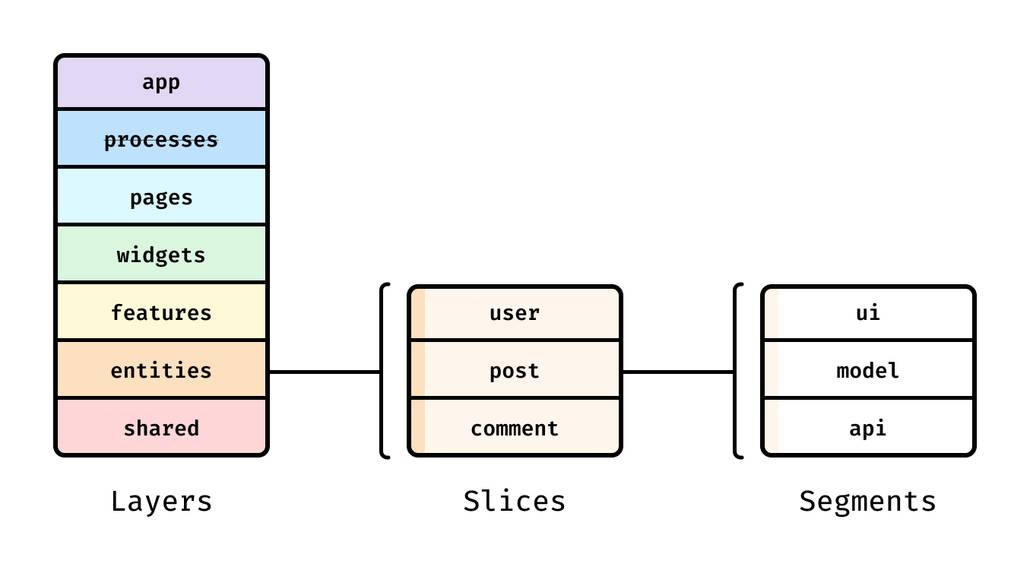
TypeScript alone does not guarantee scalability. Without structure, even perfectly typed code becomes unmanageable.
This is where Feature-Sliced Design provides a decisive advantage. By organizing code around business features, enforcing isolation, and defining explicit contracts, FSD gives TypeScript a meaningful context to operate within.
The result is:
- Lower coupling
- Higher cohesion
- Predictable growth
- Faster onboarding
- Safer refactoring
As demonstrated by projects using FSD, combining strong typing with architectural discipline is one of the most effective strategies for building resilient frontend systems.
Comparing Common Approaches to TypeScript at Scale
| Approach | Strength | Limitation |
|---|---|---|
| Ad-hoc typing | Fast initial development | Breaks under scale |
| Strict TypeScript only | High type safety | No structural guarantees |
| DDD-inspired typing | Strong domain modeling | Requires discipline |
| Feature-Sliced Design + TypeScript | Scalable, maintainable, explicit boundaries | Initial learning curve |
Conclusion: TypeScript as a Long-Term Investment
TypeScript best practices are not about syntax—they are about systems thinking. In scalable applications, types define contracts, protect boundaries, and enable confident change. Strict configuration, explicit boundaries, domain-driven modeling, and disciplined use of advanced types transform TypeScript from a safety net into an architectural foundation.
Adopting a structured methodology like Feature-Sliced Design amplifies these benefits. It aligns technical decisions with business realities, reduces accidental complexity, and creates a shared mental model across teams.
Ready to build scalable and maintainable frontend projects? Dive into the official Feature-Sliced Design Documentation to get started.
Have questions or want to share your experience? Join our active developer community on Discord!
Disclaimer: The architectural patterns discussed in this article are based on the Feature-Sliced Design methodology. For detailed implementation guides and the latest updates, please refer to the official documentation.