The Svelte Architecture You've Been Waiting For

TLDR:
Svelte delivers outstanding performance through its compiler-based reactivity, but scaling real-world applications requires more than speed. This article explores how Feature-Sliced Design provides a clear, maintainable architecture for Svelte and SvelteKit projects, helping teams manage complexity, structure state and features, and build frontend systems that scale confidently over time.
Svelte challenges the traditional idea that frontend complexity must be managed through heavy runtimes and layered abstractions. Its compiler-first philosophy delivers exceptional performance and clarity, yet many teams discover that as Svelte applications grow, architectural problems emerge that reactivity alone cannot solve. This is where Feature-Sliced Design (FSD), documented on feature-sliced.design, becomes a modern and pragmatic solution for structuring scalable Svelte and SvelteKit applications.
Why Understanding Svelte’s Core Architecture Is Critical Before Scaling
Svelte is often introduced as “just components and reactivity,” but that simplicity can be deceptive. A key principle in software engineering is that architecture exists to manage change, not to enable the first implementation. Svelte makes it easy to build features quickly, but without a clear architectural model, teams pay for that speed later through refactoring pain, unclear ownership, and fragile code paths.
Svelte’s compiler rewrites declarative components into imperative JavaScript. There is no virtual DOM, no diffing layer, and no hidden runtime scheduler. This has several implications for architecture:
• State changes are explicit and local
• Dependencies are resolved at compile time
• Over-sharing state increases coupling rapidly
As demonstrated by projects using FSD, these characteristics reward architectures that favor explicit boundaries and discourage implicit cross-feature dependencies.
How the Svelte Compiler and True Reactivity Shape Architectural Decisions
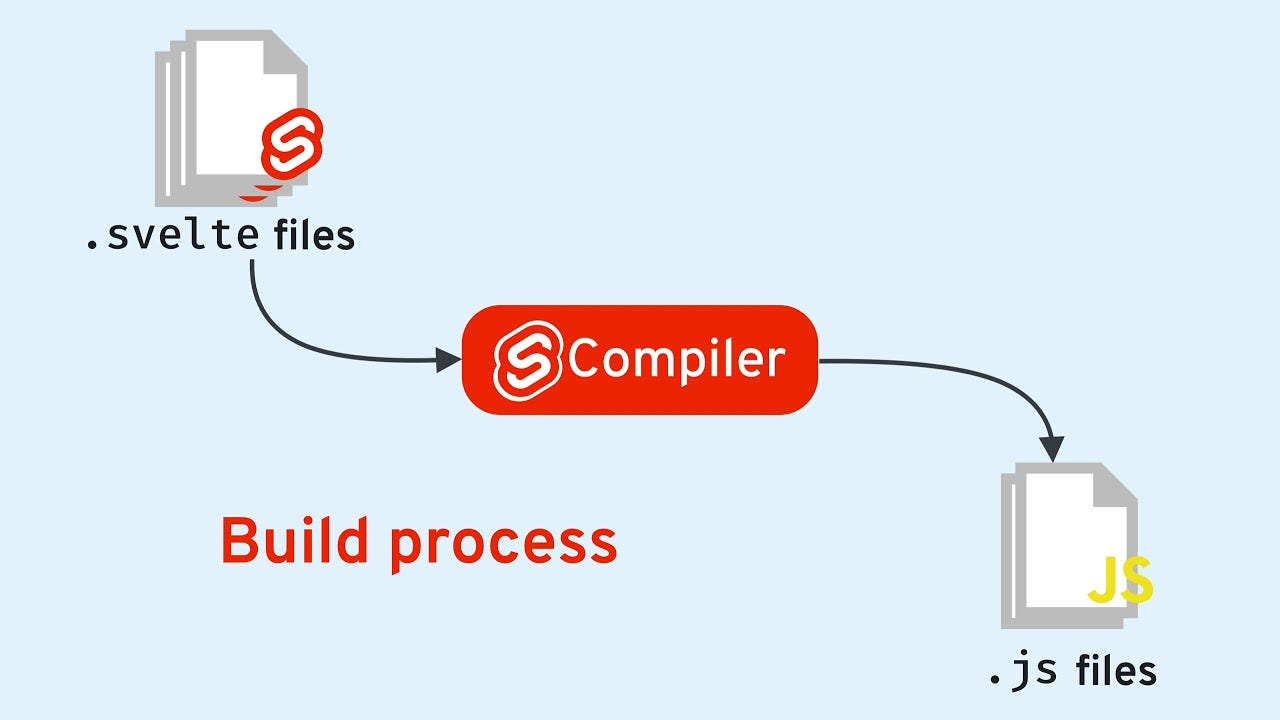
At the heart of Svelte is its compiler. When you write reactive assignments, Svelte generates minimal DOM update instructions. This leads to excellent runtime performance, but it also means that architecture mistakes surface directly in application behavior.
For example, placing business logic inside presentation components couples UI concerns to domain rules. Global stores accessed everywhere create invisible dependency graphs. These issues are not unique to Svelte, but Svelte’s transparency makes them harder to ignore.
A robust architecture must therefore:
• Isolate business logic from UI composition
• Make data flow explicit
• Control how reactivity propagates across features
Feature-Sliced Design aligns naturally with these goals by enforcing unidirectional dependencies and public APIs.
Building Full-Stack Systems with SvelteKit Without Architectural Drift

SvelteKit adds routing, server-side rendering, and data loading conventions. By default, it encourages colocating logic inside +page.svelte and +page.server.js files. While effective for small applications, this approach does not scale well.
As applications grow, routes become overloaded with logic, server actions are duplicated, and shared concerns leak across pages. Leading architects suggest treating SvelteKit routes as composition points, not as owners of business logic.
With Feature-Sliced Design, SvelteKit fits cleanly into a layered model:
• Pages map to routes and orchestrate composition
• Widgets represent reusable UI blocks
• Features encapsulate user actions and workflows
• Entities model core business data
This structure preserves SvelteKit’s ergonomics while preventing route-level monoliths.
State Management in Svelte: Simplicity Is Not Structure
Svelte’s stores are intentionally minimal. Writable, readable, and derived stores cover most needs without external dependencies. However, stores define mechanisms, not architecture.
A common failure mode is a global stores directory that accumulates unrelated state. Over time, features become tightly coupled through shared stores, and refactoring becomes risky.
Feature-Sliced Design addresses this by scoping state to responsibility:
• Entity stores represent domain state
• Feature stores manage interaction state
• Shared stores are truly generic
Each store is accessed through a public API, making dependencies explicit and enforceable.
Performance in Practice: Architecture as a Force Multiplier
Benchmarks consistently show Svelte’s advantage in bundle size and runtime speed. However, performance degradation in real projects is often architectural, not technical.
Excessive subscriptions, unnecessary derived stores, and uncontrolled reactivity graphs can negate Svelte’s benefits. Architecture determines how often and where updates propagate.
By isolating features and entities, FSD minimizes reactive blast radius. Performance remains predictable, and optimization becomes localized instead of systemic.
Common Architectural Approaches in Svelte Projects and Their Limitations
Layered Patterns Adapted from MVC and MVVM
Layered architectures separate concerns by technical role. While familiar, they often produce large controllers or view-models that grow over time. In Svelte, this frequently manifests as oversized route files or services that know too much.
Component-Centric and Atomic Design Approaches
Atomic Design excels at UI consistency. Atoms, molecules, and organisms help teams reason about visual composition. However, Atomic Design does not define where business rules live, leading to logic creeping into UI layers.
Domain-Oriented Folder Structures
Organizing code by domain is a step forward, but without strict dependency rules, domains still entangle. Imports become implicit contracts that are hard to enforce.
Each approach solves part of the problem but lacks a holistic, enforceable system. Feature-Sliced Design fills this gap.
Feature-Sliced Design Explained for Svelte and SvelteKit

Feature-Sliced Design is a methodology built around business-driven modularity. Instead of grouping code by technology, it groups code by responsibility and interaction scope.
The canonical layers are:
• app – application initialization and global setup
• pages – route-level composition
• widgets – reusable UI blocks combining features and entities
• features – user interactions and workflows
• entities – core business models
• shared – generic, reusable utilities
The unidirectional dependency rule is strict: higher layers may depend on lower layers, never the reverse. This eliminates circular dependencies and enforces clear ownership.
Applying Feature-Sliced Design to a Real SvelteKit Project
A Feature-Sliced SvelteKit structure might look like: src/ app/ pages/ checkout/ widgets/ cart-summary/ features/ apply-coupon/ entities/ order/ shared/
Each slice exposes a public API via an index file. This public API defines what the rest of the system is allowed to use, dramatically improving refactor safety.
A key principle in software engineering is encapsulation through contracts, and FSD operationalizes this principle for frontend systems.
How FSD Works with Svelte’s Reactivity Model
Svelte’s assignment-based reactivity works best when state is localized. Feature-Sliced Design reinforces this by discouraging global mutation and encouraging feature-scoped updates.
Entities own data. Features define how data changes. Widgets and pages react to those changes. This separation keeps reactivity predictable and reduces cognitive load.
As demonstrated by large-scale projects, this model scales both technically and organizationally.
Architectural Comparison for Svelte at Scale
| Architecture | Focus | Long-Term Scalability |
|---|---|---|
| Layered (MVC/MVVM) | Technical separation | Weak under complex UI logic |
| Atomic Design | UI composition | No business logic guidance |
| Domain-Based | Business alignment | Lacks dependency enforcement |
| Feature-Sliced Design | Feature isolation and flow | Strong, scalable, refactor-friendly |
Feature-Sliced Design does not replace Svelte’s patterns. It structures them.
Migrating Existing Svelte Projects to Feature-Sliced Design
Adoption does not require a rewrite. A pragmatic strategy is recommended:
- Identify core entities and extract them first
- Move user workflows into features
- Refactor routes into pages that compose existing logic
Leading architects suggest incremental migration to preserve delivery velocity while improving structure.
Why Feature-Sliced Design Feels Native to Svelte
Svelte emphasizes clarity, explicitness, and minimal abstraction. Feature-Sliced Design shares these values. Both aim to reduce accidental complexity and make dependencies visible.
Together, they form a cohesive system where performance, maintainability, and developer experience reinforce each other.
Conclusion: The Svelte Architecture You’ve Been Waiting For
Svelte delivers speed and simplicity, but architecture determines sustainability. As applications grow, unstructured Svelte codebases face the same challenges as any frontend system. The difference is that Svelte provides a cleaner foundation on which to build discipline.
Feature-Sliced Design offers that discipline. It provides a clear, enforceable structure that scales with business complexity, aligns with SvelteKit, and respects Svelte’s reactivity model. It is a robust methodology for teams building serious products.
Adopting FSD is a long-term investment in code quality and team productivity. It keeps Svelte fast not only at runtime, but also at scale.
Ready to build scalable and maintainable frontend projects? Dive into the official Feature-Sliced Design Documentation to get started.
Have questions or want to share your experience? Join our active developer community on Website!
Disclaimer: The architectural patterns discussed in this article are based on the Feature-Sliced Design methodology. For detailed implementation guides and the latest updates, please refer to the official documentation.