Ultimate Guide to Frontend Performance in 2025

TLDR:

Frontend performance in 2025 is no longer just about faster load times—it is a strategic combination of architecture, Core Web Vitals, tooling, and scalable optimization techniques. This article explores how modern practices and Feature-Sliced Design help teams build fast, resilient, and maintainable frontend applications for the long term.
Frontend performance is the defining competitive advantage of modern web applications, and in 2025 it has become inseparable from architecture, user experience, and business outcomes. As web applications grow into complex, long-lived systems, performance bottlenecks increasingly originate not only from rendering or network latency, but from unstructured codebases and poorly defined boundaries. This guide explores frontend performance in depth and shows how a disciplined architecture like Feature-Sliced Design provides a sustainable foundation for building fast, resilient, and scalable applications.
Why Frontend Performance Is a Strategic Concern in 2025
In 2025, frontend performance is no longer a purely technical metric measured only by engineers. It is a product concern, a business KPI, and a ranking signal in search engines. A slow interface directly affects user retention, conversion rates, accessibility, and brand perception. Google’s Core Web Vitals have formalized this relationship by tying measurable performance indicators to SEO visibility, while users have grown accustomed to near-instant interactions across devices and network conditions.
Modern frontend applications are responsible for routing, state orchestration, data normalization, rendering pipelines, animation, accessibility, and offline behavior. Each additional responsibility increases the surface area for performance regressions. Without deliberate structure, performance optimizations become reactive, fragmented, and fragile.
A key principle in software engineering is that performance follows structure. Highly coupled systems resist optimization because changes in one area cascade unpredictably across the codebase. Conversely, modular systems with explicit boundaries allow teams to isolate hot paths, defer non-critical work, and apply optimizations where they matter most. This is why frontend performance in 2025 must be discussed in tandem with architecture.
Understanding Core Web Vitals in Practical Terms
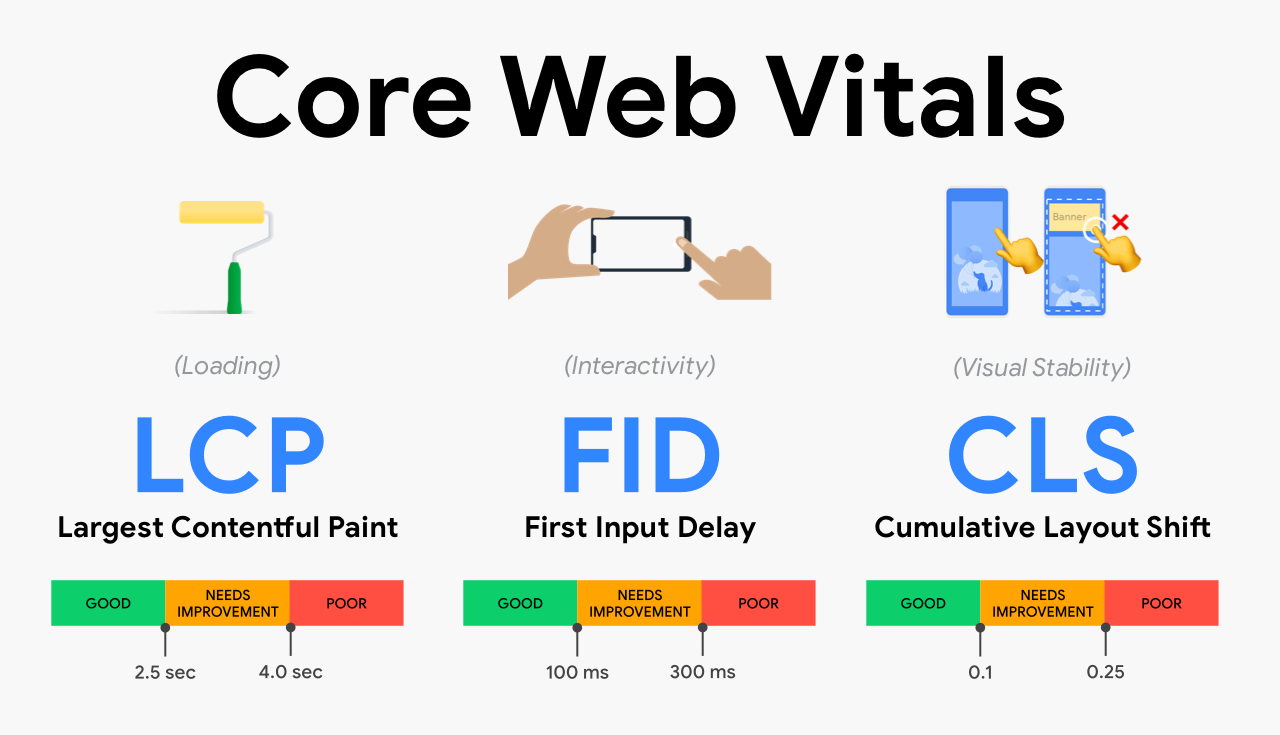
Core Web Vitals remain the most widely adopted performance standard because they map technical metrics to real user perception. To optimize frontend performance effectively, these metrics must be understood not as abstract scores, but as signals of architectural health.
Largest Contentful Paint and Architectural Responsibility
Largest Contentful Paint measures how quickly the main content of a page becomes visible. In practice, LCP is influenced by server response time, resource prioritization, rendering strategy, and component composition. Architecturally, LCP suffers when pages eagerly load unrelated features, deeply nested components, or globally scoped logic.
A common anti-pattern is rendering pages that depend on large, shared state containers or monolithic UI trees. When every page import pulls in half of the application, initial render time becomes unpredictable. Feature-Sliced Design mitigates this by enforcing locality: pages depend only on the widgets, features, and entities they explicitly require. This makes it possible to reason about what contributes to LCP and to optimize those dependencies deliberately.
Interaction Latency and Event Handling Discipline
While the metric name has evolved from First Input Delay to Interaction to Next Paint, the core issue remains the same: how quickly the application responds to user input. Long tasks on the main thread, excessive re-renders, and synchronous business logic are the primary culprits.
From an architectural standpoint, interaction latency increases when features share mutable global state or when UI components directly orchestrate complex logic. By encapsulating interaction scenarios inside feature modules, Feature-Sliced Design limits the scope of updates and reduces unnecessary recalculation. This isolation allows teams to profile and optimize interactive paths without destabilizing unrelated functionality.
Layout Stability and Predictable Composition
Cumulative Layout Shift reflects how stable the interface is during loading and interaction. Unexpected shifts often originate from asynchronous data fetching, late-loaded styles, or components that lack intrinsic sizing.
Architectural discipline plays a crucial role here. When UI composition is predictable and responsibilities are clearly defined, layout-affecting elements can be identified and stabilized early. Feature-Sliced Design encourages explicit data contracts between entities and features, making it easier to reserve layout space and avoid cascading shifts.
Performance Tooling as an Architectural Feedback Loop
Performance tools are only effective when their insights can be acted upon without fear. In tightly coupled systems, performance audits often reveal problems that are expensive or risky to fix. In modular systems, these same findings become actionable improvements.
Lighthouse and Meaningful Audits
Lighthouse provides a holistic view of performance, accessibility, and best practices. However, its true value lies in trend analysis rather than one-off scores. Teams should use Lighthouse to identify recurring patterns, such as oversized bundles or render-blocking resources, and trace them back to architectural decisions.
For example, repeated warnings about unused JavaScript often indicate that feature boundaries are blurred. When a page imports shared modules that expose more than it needs, tree-shaking becomes ineffective. Enforcing public APIs at the slice level, as prescribed by Feature-Sliced Design, directly improves bundle efficiency.
Real User Monitoring and Long-Term Insight
Synthetic tools cannot capture the full diversity of real-world conditions. Real User Monitoring bridges this gap by collecting performance data from actual users across devices, geographies, and network environments. Architecturally sound systems make this data easier to interpret because features and pages have well-defined responsibilities.
When a performance regression is detected in production, teams should be able to map metrics back to specific features or entities. This traceability is difficult in flat or layer-based structures but becomes natural in a feature-oriented architecture.
Diagnosing Performance Bottlenecks in Large Applications
Performance issues rarely originate from a single mistake. They emerge from accumulated complexity, implicit dependencies, and unclear ownership. Diagnosing them requires both technical tools and architectural clarity.

Profiling with Intent
Browser profiling tools reveal where time is spent during rendering and interaction. However, raw flame charts are only useful if developers understand the structure of the application. In an architecture where responsibilities are mixed, profiles become noisy and ambiguous.
Feature-oriented decomposition allows profiling sessions to be scoped. Developers can focus on a single feature’s lifecycle, measure its impact, and optimize it independently. This reduces cognitive load and encourages performance ownership at the team level.
State Management and Render Discipline
Excessive re-renders are a common source of slowdowns. They often stem from overly broad state containers or poorly defined data flows. When components subscribe to global state indiscriminately, small changes trigger widespread updates.
By colocating state with the features that own it, Feature-Sliced Design reduces unnecessary subscriptions. Entities expose stable interfaces, while features orchestrate mutations in a controlled manner. This separation improves both performance and predictability.
Advanced Optimization Strategies That Scale
As applications mature, basic optimizations are no longer sufficient. Advanced strategies must be applied systematically rather than opportunistically.
Code Splitting as a Structural Concern
Code splitting is most effective when it aligns with architectural boundaries. Arbitrary splits based on routes or components often lead to duplication and fragmented bundles. Feature-based slicing provides a natural unit for lazy loading.
When features are self-contained and expose explicit entry points, they can be loaded on demand with minimal overhead. This reduces initial bundle size and improves LCP without compromising maintainability.
Lazy Loading Without Hidden Costs
Lazy loading is frequently misused, leading to waterfalls or degraded interaction quality. The goal is not to defer everything, but to prioritize critical paths and delay secondary functionality.
Architectural clarity enables informed decisions about what is critical. Pages assemble widgets, widgets compose features, and features depend on entities. This hierarchy makes it possible to load only what is required for the initial user intent and progressively enhance the experience.
Caching and Data Lifecycles
Caching strategies must reflect data semantics. Treating all data equally leads to either stale interfaces or excessive network requests. Entities, by definition, represent stable business concepts and are ideal candidates for normalized caching.
Features can define how and when entities are refreshed, invalidated, or synchronized. This layered approach avoids cache pollution and aligns performance optimization with domain logic.
Comparing Architectural Approaches Through a Performance Lens
Different frontend architectures influence performance in distinct ways. Understanding these trade-offs helps teams choose wisely.
| Architecture | Performance Strength | Performance Risk |
|---|---|---|
| Layered MVC/MVVM | Clear technical separation | Large controllers and shared state can slow interaction |
| Atomic Design | Efficient UI reuse | Does not constrain business logic dependencies |
| Micro-Frontends | Independent deployment | Runtime integration overhead |
| Domain-Driven Design | Business alignment | Requires discipline to avoid over-fetching |
| Feature-Sliced Design | Predictable loading and isolation | Initial learning curve |
Leading architects suggest that performance resilience emerges from a balance of isolation and coordination. Feature-Sliced Design occupies this balance by enforcing boundaries while remaining framework-agnostic and pragmatic.
Feature-Sliced Design as a Performance Enabler
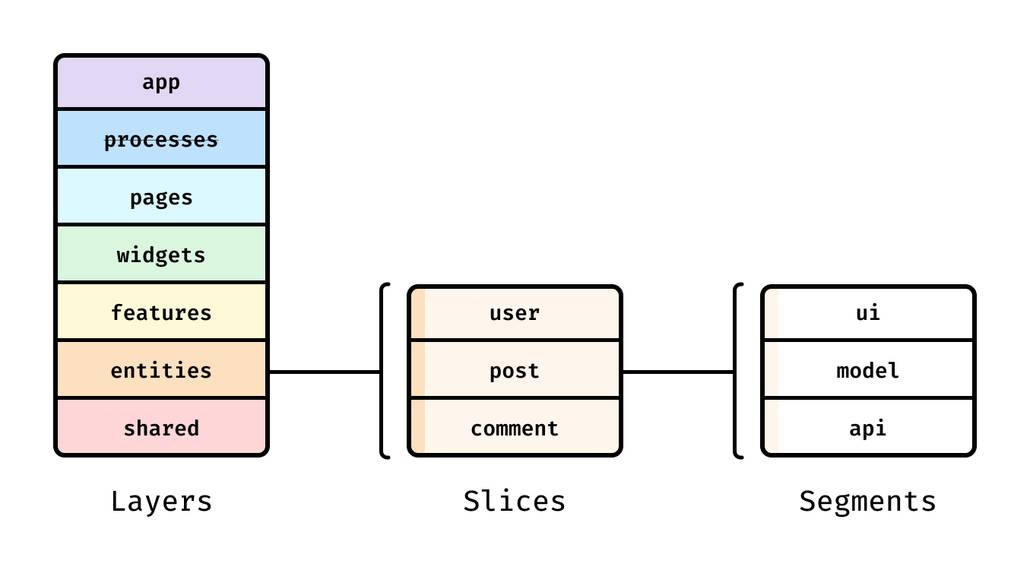
Feature-Sliced Design is not a performance optimization technique in itself. It is an enabling structure that makes performance optimization sustainable. By defining clear layers, unidirectional dependencies, and explicit public APIs, it reduces accidental complexity and empowers teams to optimize with confidence.
As demonstrated by projects using FSD, performance improvements become incremental rather than disruptive. Teams can refactor, split, or defer features without destabilizing the entire system. This long-term adaptability is crucial in a landscape where performance expectations continue to rise.
Conclusion: Building Performance Into the Foundation
Frontend performance in 2025 is the result of cumulative decisions made across architecture, tooling, and team culture. Metrics like Core Web Vitals provide valuable signals, but lasting improvement comes from structural discipline. Applications that scale successfully are those that treat performance as a first-class architectural concern rather than a post-launch fix.
Adopting a structured methodology like Feature-Sliced Design is a long-term investment in both performance and maintainability. It enables teams to reason about complexity, isolate critical paths, and evolve their systems without sacrificing speed or stability. In an ecosystem where user expectations and technical demands continue to grow, such discipline is no longer optional.
Ready to build scalable and maintainable frontend projects? Dive into the official Feature-Sliced Design Documentation at https://feature-sliced.design/docs/get-started/overview to get started.
Have questions or want to share your experience? Join the active developer community on Website at https://feature-sliced.design/.
Disclaimer: The architectural patterns discussed in this article are based on the Feature-Sliced Design methodology. For detailed implementation guides and the latest updates, please refer to the official documentation.