Why Remix's Architecture Is So Damn Good

TLDR:

Remix rethinks frontend architecture by embracing web standards, progressive enhancement, and explicit data flow through loaders and actions. When combined with Feature-Sliced Design, it provides a scalable, maintainable foundation for building large, resilient web applications with clear boundaries and long-term stability.
Remix is often described as “just another React framework,” but that framing misses the real story. Remix is a deliberate architectural statement about how the web should be built in 2025: grounded in web standards, optimized for progressive enhancement, and designed to reduce accidental complexity in large-scale applications. For teams struggling with spaghetti code, fractured data flows, and fragile abstractions, Remix pairs naturally with structured methodologies like Feature-Sliced Design to create systems that are both scalable and humane to maintain.
Why Remix’s Architectural Philosophy Matters More Than Ever
A key principle in software engineering is that most long-term costs come not from features, but from complexity. Frontend complexity has exploded over the last decade. What used to be a thin UI layer is now responsible for routing, data fetching, mutations, caching, accessibility, and performance optimization. Many frameworks attempted to solve this by adding more abstraction layers, custom APIs, and framework-specific mental models. Remix takes the opposite path.
Remix’s architecture is compelling because it treats the web platform itself as the primary abstraction. HTTP, URLs, forms, and browser navigation are not things to hide; they are the core primitives. This decision has profound consequences for maintainability, correctness, and scalability. Instead of inventing new conventions for data loading and mutations, Remix aligns your application structure with how the web already works.
From an architectural perspective, this reduces coupling between layers. Your UI is not tightly bound to a proprietary client-side state machine. Your data loading logic is explicit, colocated, and predictable. Your mutation flow mirrors standard request-response cycles. As demonstrated by teams building long-lived products, this alignment with fundamentals makes systems easier to reason about, easier to refactor, and far more resilient over time.
Progressive Enhancement as a First-Class Architectural Constraint
Progressive enhancement is often discussed as an accessibility or performance concern, but Remix elevates it to an architectural constraint. In Remix, the baseline experience always works without JavaScript. Enhancements layer on top of that baseline, instead of replacing it.
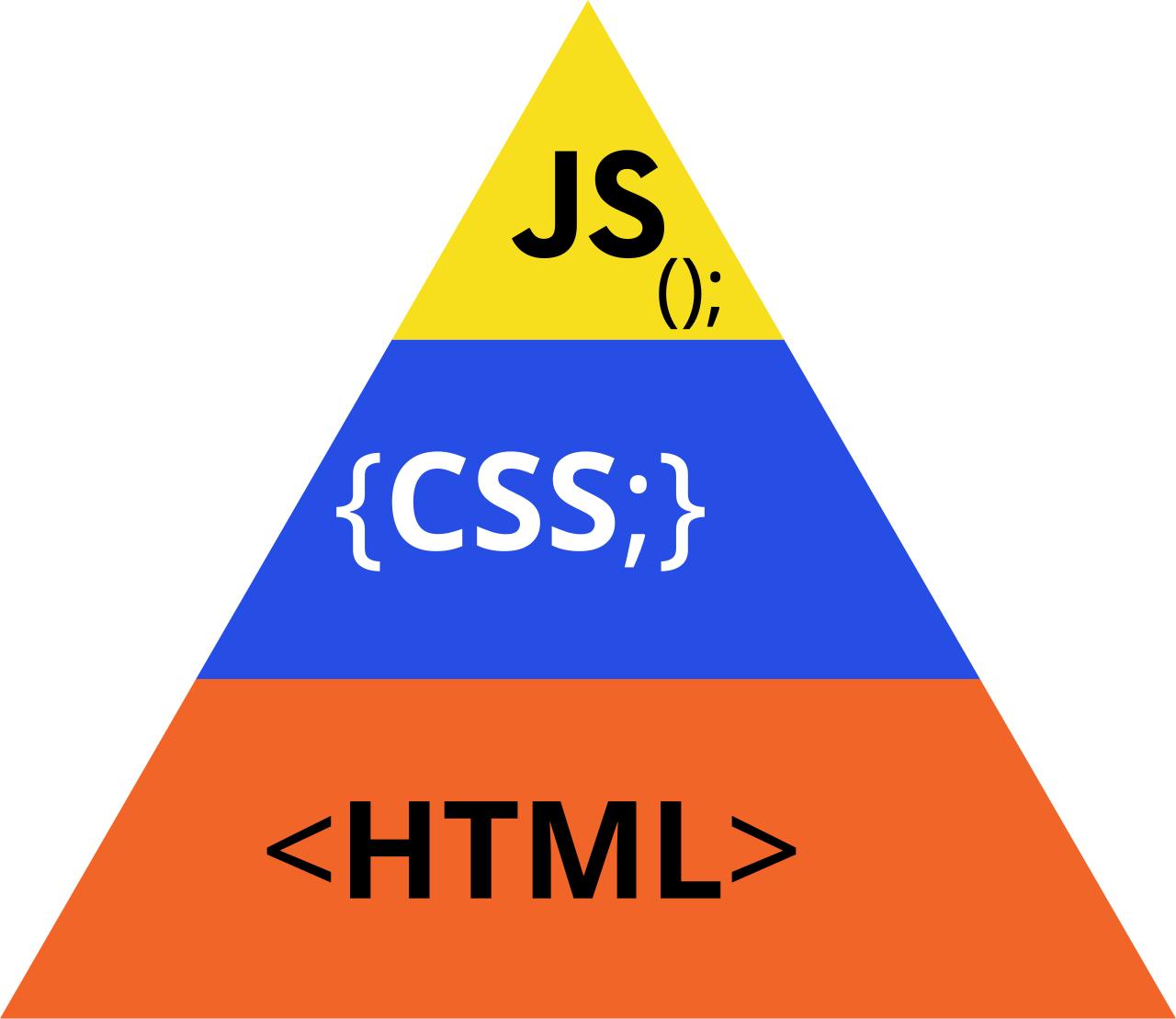
Architecturally, this has two important effects. First, it forces a clean separation between intent and interaction. A form submission is a form submission, regardless of whether JavaScript is enabled. Second, it encourages developers to model features around real user flows instead of artificial client-side abstractions.
For large teams, this constraint acts as a guardrail. It prevents over-engineering and keeps features grounded in real-world usage. When combined with Feature-Sliced Design, progressive enhancement fits naturally into feature boundaries. Each feature slice encapsulates its user-facing behavior, its data requirements, and its enhancement logic without leaking complexity upward into the app layer.
Remix Routing as an Architectural Backbone
Routing in Remix is not just about navigation; it is the backbone of the entire architecture. Routes define data ownership, layout composition, and error boundaries. Nested routes are not a convenience feature, but a structural primitive.
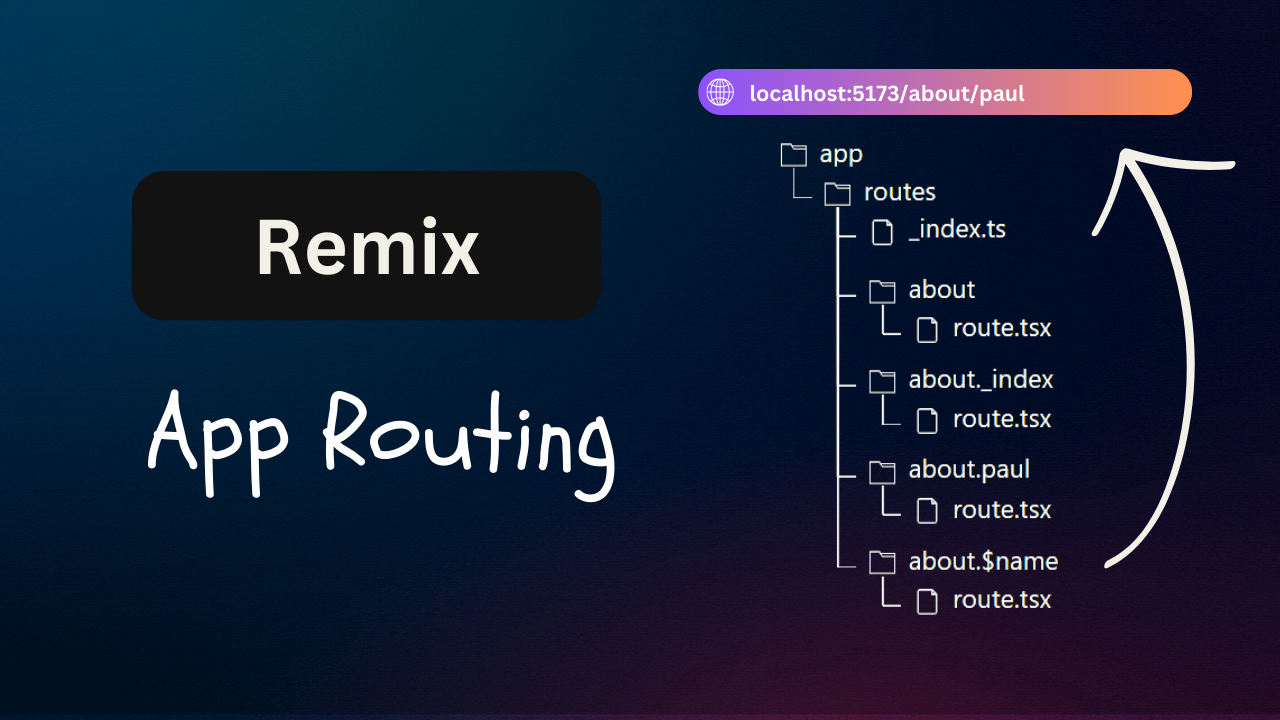
Each route owns its data via a loader and its mutations via actions. This creates strong cohesion: everything related to a route lives together. In architectural terms, this reduces temporal coupling. You no longer need to ask “where does this data come from?” because the answer is always the route.
Nested routing also enables compositional layouts without global state hacks. Parent routes define shared context, while child routes refine behavior. This mirrors how complex UIs are actually structured and maps cleanly onto Feature-Sliced Design layers. Pages compose widgets, widgets consume features, and features operate on entities, all without violating dependency rules.
Loaders: Explicit, Server-Centric Data Ownership
Remix loaders are one of the clearest examples of why its architecture is so effective. A loader is a server-side function that defines exactly what data a route needs. There is no hidden data fetching, no implicit cache invalidation, and no magical synchronization layer.
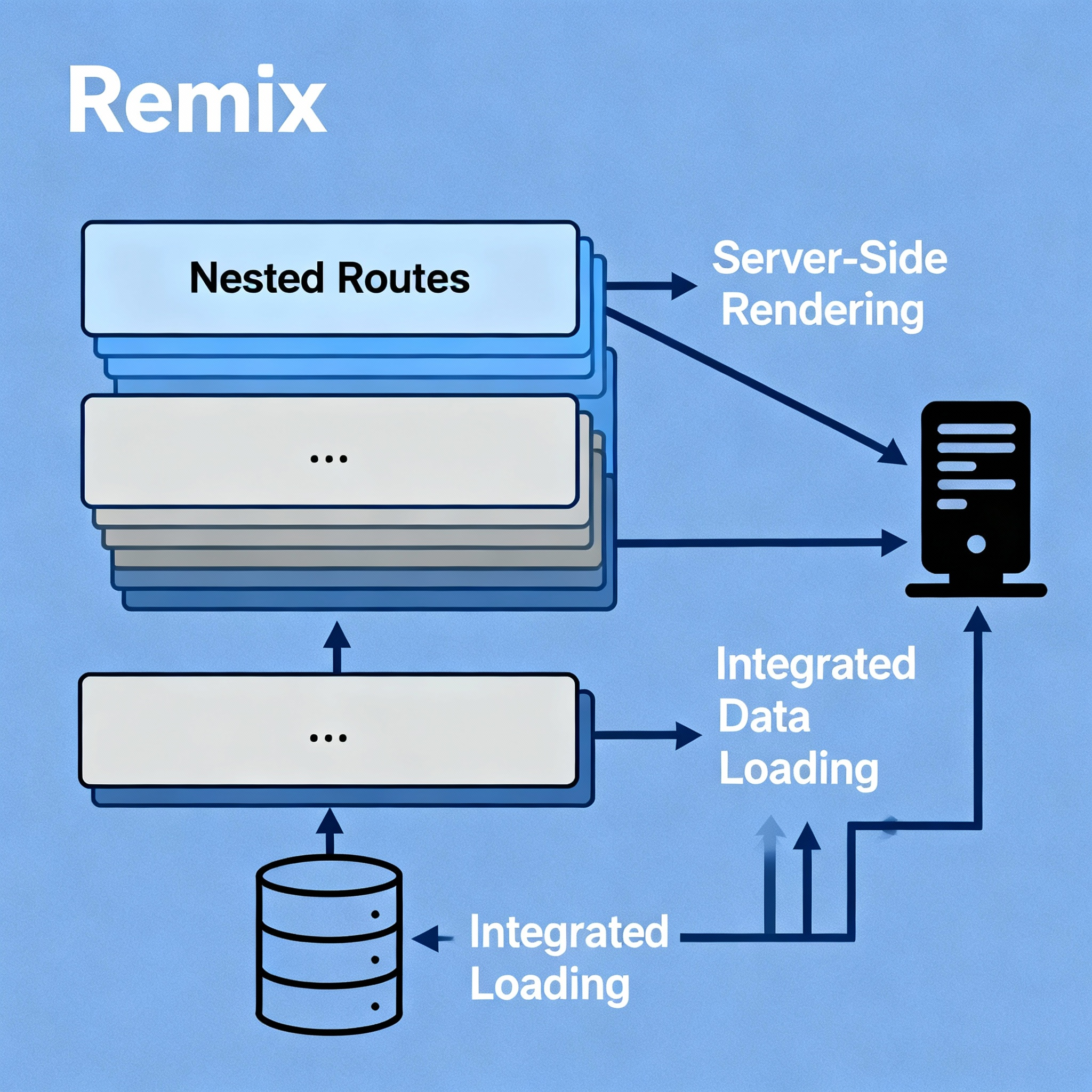
From a systems design perspective, loaders enforce explicit data contracts. The route declares its dependencies, the server fulfills them, and the UI renders based on that contract. This clarity dramatically improves refactorability. When requirements change, you know exactly where to make updates.
Loaders also integrate naturally with HTTP caching semantics. Because they run on the server and respond to requests, they can leverage headers, status codes, and conditional requests. This is a rare case where architectural purity directly translates into performance gains.
When structured with Feature-Sliced Design, loaders often live close to the page or feature that consumes them. This reinforces cohesion while maintaining isolation. The shared layer remains free of business logic, entities model domain data, and features orchestrate behavior without leaking concerns across boundaries.
Actions: Mutations Without the Ceremony
If loaders define how data enters the system, actions define how it changes. Remix actions handle mutations through standard HTTP verbs and form submissions. There is no separate mutation API, no client-side command bus, and no framework-specific DSL.
This simplicity is deceptive. Actions provide a powerful architectural guarantee: every mutation has a clear entry point, a predictable lifecycle, and a natural place for validation and authorization. Errors propagate through the same mechanisms as data loading errors, making failure states explicit and manageable.
For teams dealing with complex workflows, this approach reduces incidental complexity. You do not need a separate mental model for “client mutations” versus “server mutations.” Everything is just a request. This consistency improves onboarding and reduces the risk of subtle bugs.
In Feature-Sliced Design terms, actions typically belong to features. A feature slice encapsulates a user interaction scenario, including its mutation logic. This aligns perfectly with FSD’s emphasis on business-driven decomposition and public APIs.
Error Boundaries as Structural Elements
Error handling is often an afterthought in frontend architecture. Remix treats error boundaries as first-class citizens. Every route can define its own error boundary, and errors are scoped to the smallest possible unit.
This has architectural significance. It localizes failure. A broken child route does not take down the entire application. Instead, the error is contained and rendered within the context where it occurred. This mirrors principles from fault-tolerant system design and applies them to the frontend.
When combined with nested routing, error boundaries form a hierarchy that matches the UI structure. This makes error behavior predictable and composable. Feature-Sliced Design benefits from this because features can fail independently without violating global stability.
Remix and Feature-Sliced Design: A Natural Fit
Feature-Sliced Design is built around clear boundaries, unidirectional dependencies, and explicit public APIs. Remix’s architecture reinforces these principles instead of fighting them. Routes map cleanly to pages. Loaders and actions live alongside the features they support. Shared logic stays truly shared, without creeping business dependencies.
A common anti-pattern in large React applications is the “shared dumping ground,” where hooks, services, and utilities accumulate without clear ownership. Remix discourages this by making data flow explicit and route-centric. FSD complements this by enforcing where code is allowed to live and how it can be consumed.
Leading architects suggest that good architecture is not about adding rules, but about removing ambiguity. The combination of Remix and Feature-Sliced Design does exactly that. Each concern has a home. Each dependency has a direction. Each feature has a clear surface area.
Comparing Remix with Next.js from an Architectural Perspective
Comparisons between Remix and Next.js often focus on features or performance benchmarks, but the real difference lies in philosophy. Next.js abstracts the web behind a framework-centric model. Data fetching, routing, and rendering are optimized for flexibility, but at the cost of conceptual overhead.
Remix, by contrast, embraces the constraints of the web. There is less magic, but more predictability. Loaders replace a patchwork of data fetching strategies. Actions replace ad hoc mutation layers. Nested routes replace global layout hacks.
Architecturally, this means Remix systems tend to have lower coupling and higher cohesion. Next.js can scale, but it often requires additional conventions, lint rules, and discipline to avoid entropy. Remix bakes many of those constraints into the framework itself.
For teams already using Feature-Sliced Design, Remix reduces friction. The framework does not push you toward global state or cross-cutting abstractions. Instead, it reinforces feature boundaries and page-level ownership.
File Structure and Modularity in Practice
A Remix application structured with Feature-Sliced Design typically follows a clear pattern. The app layer initializes providers and global styles. Pages correspond to routes. Widgets compose features. Features encapsulate user scenarios. Entities model domain concepts. Shared contains truly generic code.
This structure scales well because it mirrors both the UI hierarchy and the business domain. Adding a new feature does not require touching unrelated parts of the system. Removing a feature does not leave behind orphaned logic.
Public APIs play a crucial role here. Each slice exposes only what it intends to share. This enforces encapsulation and prevents tight coupling. Over time, this discipline pays dividends in maintainability and team velocity.
Performance as an Emergent Property
One of the most compelling aspects of Remix’s architecture is that performance emerges naturally from good design. Server-side data loading, HTTP caching, and progressive enhancement all contribute to fast initial loads and resilient interactions.
Unlike frameworks that rely heavily on client-side hydration and complex caching layers, Remix keeps the critical path short. Users see content quickly, even on slow networks. JavaScript enhances the experience instead of gating it.
From an architectural standpoint, this reduces the need for premature optimization. Teams can focus on correctness and clarity first, knowing that the framework supports efficient defaults.
Maintainability and Team Scalability
Maintainability is where Remix truly shines. Explicit data flow, clear ownership, and alignment with web standards make systems easier to evolve. New developers can follow the URL structure to understand the application. There are fewer hidden conventions and fewer “framework tricks” to learn.
Feature-Sliced Design amplifies this benefit. By enforcing consistent structure across projects, it reduces cognitive load and accelerates onboarding. Teams can move between codebases without relearning architectural decisions.
As projects grow, this consistency becomes a competitive advantage. Refactors are safer. Features are easier to reason about. Technical debt grows more slowly because the architecture resists entropy.
When Remix Might Not Be the Right Choice
No architecture is universal. Remix’s server-centric model may not suit applications that require fully offline operation or extremely specialized client-side rendering pipelines. Teams deeply invested in client-only paradigms may face a learning curve.
However, these trade-offs are explicit. Remix does not hide its assumptions. For most web applications that rely on standard request-response flows, the benefits outweigh the costs.
Conclusion: Remix as an Architectural Statement
Remix is not just a framework; it is a statement about how frontend architecture should work. By embracing web standards, enforcing explicit data flow, and treating progressive enhancement as a core principle, it offers a robust foundation for long-term projects.
When combined with Feature-Sliced Design, Remix becomes even more powerful. The framework and the methodology reinforce each other, creating systems that are modular, maintainable, and resilient. This is not about chasing trends, but about building software that lasts.
Ready to build scalable and maintainable frontend projects? Dive into the official Feature-Sliced Design Documentation to get started: https://feature-sliced.design/docs/get-started/overview
Have questions or want to share your experience? Join our active developer community on Website: https://feature-sliced.design/
Disclaimer: The architectural patterns discussed in this article are based on the Feature-Sliced Design methodology. For detailed implementation guides and the latest updates, please refer to the official documentation.