Enterprise-Ready Architecture with Angular

TLDR:

Building large-scale Angular applications requires more than just components and modules. This in-depth guide explores how to design an enterprise-ready Angular architecture using Feature-Sliced Design, helping teams control complexity, reduce technical debt, and scale frontend systems with confidence.
Angular applications often fail not because of missing features, but because their architecture cannot scale with growing teams, complex business logic, and long-term maintenance demands. In modern frontend systems, Feature-Sliced Design (FSD), as documented on feature-sliced.design, emerges as a pragmatic solution that aligns Angular’s strengths with enterprise-grade architectural discipline. This article explores how to design an enterprise-ready architecture with Angular, grounded in proven software engineering principles and real-world constraints.
Why Enterprise-Grade Architecture Matters for Angular Applications
A key principle in software engineering is that architecture determines the ceiling of scalability and maintainability. Angular is a powerful, opinionated framework that already provides many building blocks for large-scale applications: modules, dependency injection, RxJS, and a strong tooling ecosystem. However, these tools alone do not guarantee a clean or scalable system.
As Angular projects grow, teams commonly encounter:
• Bloated modules that mix unrelated responsibilities
• Tight coupling between UI, business logic, and infrastructure
• Difficult refactoring due to unclear boundaries
• Inconsistent folder structures across teams
• Slow onboarding for new developers
Without a deliberate architecture, Angular applications tend to degrade into framework-shaped monoliths. The goal of enterprise-ready architecture is to preserve cohesion, minimize coupling, and enforce clear ownership boundaries as the system evolves.
Core Angular Concepts You Must Master First
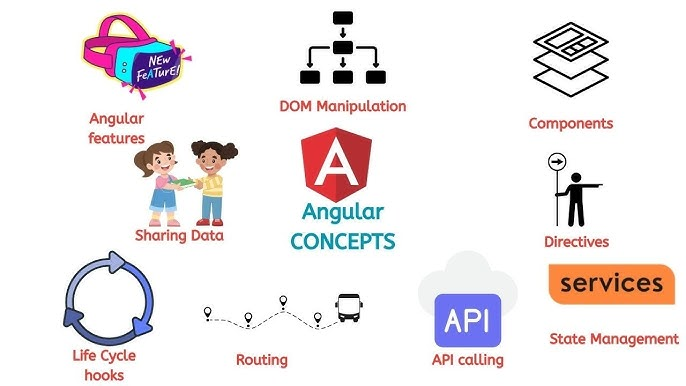
Before discussing higher-level architectural methodologies, it is critical to understand the foundational concepts that Angular provides out of the box.
Angular Modules as a Structural Primitive
Angular modules were originally designed as a compilation and dependency boundary. In enterprise applications, misuse of modules is one of the most common architectural pitfalls.
Common anti-patterns include:
• A single AppModule importing everything
• Feature modules leaking internal services
• Shared modules becoming dumping grounds
A well-structured Angular system treats modules as composition units, not arbitrary folders. Each module should expose a clear public API, typically via its index.ts, and hide implementation details.
Dependency Injection as an Architectural Tool
Angular’s dependency injection system is not just a convenience; it is a powerful architectural mechanism.
Proper DI usage enables:
• Loose coupling between layers
• Easier testing and mocking
• Clear separation of responsibilities
Enterprise Angular applications should avoid injecting concrete implementations directly. Instead, depend on abstractions, tokens, or interfaces to preserve flexibility and isolation.
RxJS and Asynchronous Control Flow
RxJS is central to Angular’s reactive model. At scale, unstructured observable usage can become a liability.
Best practices include:
• Centralizing side effects
• Keeping streams small and composable
• Avoiding nested subscriptions
• Treating observables as data pipelines, not callbacks
A clean architecture ensures RxJS logic lives close to the business feature, not scattered across components.
Traditional Angular Architectures and Their Limits
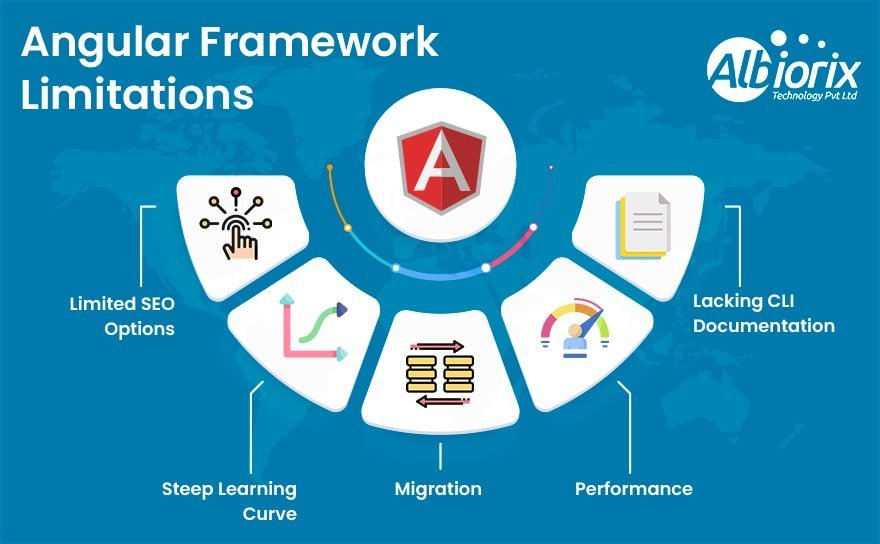
Layered Architecture (MVC / MVVM)
Angular naturally encourages MVVM through components and templates. This approach works well for small to medium applications.
Strengths:
• Clear separation between view and logic
• Easy mental model for new developers
Limitations at scale:
• ViewModels become bloated
• Business logic spreads across components
• Hard to isolate features
Component-Centric Organization
Many Angular projects organize code around components:
components/ services/ pipes/ directives/
This structure optimizes for technical roles, not business intent.
Problems include:
• Features split across many folders
• Difficult feature deletion or refactoring
• Low cohesion
Domain-Driven Design in Angular
Domain-Driven Design introduces the idea of organizing code by business domains.
Example: order/ product/ user/
DDD improves alignment with business concepts, but lacks clear guidance on UI composition and cross-cutting concerns in frontend systems.
Feature-Sliced Design: A Scalable Blueprint for Angular

Feature-Sliced Design (FSD) builds on proven principles from DDD, modular design, and component-based architecture. It provides a clear, enforceable structure for large-scale frontend systems.
Core Layers of Feature-Sliced Design
FSD organizes the application into layers with strict dependency rules:
• app – application initialization and global providers
• pages – route-level compositions
• widgets – reusable UI blocks composed of features
• features – user actions and business logic
• entities – core domain models
• shared – reusable, business-agnostic utilities
Dependencies flow downward only, ensuring unidirectional coupling.
Why FSD Fits Angular Exceptionally Well
Angular already enforces many constraints that FSD formalizes:
• Strong module boundaries
• Explicit dependency injection
• Clear build-time checks
FSD complements Angular by answering questions Angular itself does not:
• Where does business logic live?
• How do features communicate safely?
• How do teams scale independently?
Structuring an Enterprise Angular App with FSD
Example Folder Structure
src/ app/ providers/ app.module.ts
pages/ checkout-page/ ui/ index.ts
widgets/ order-summary/ ui/ model/ index.ts
features/ place-order/ api/ model/ ui/ index.ts
entities/ order/ model/ api/ ui/ index.ts
shared/ ui/ lib/ config/
Each slice exposes a public API via index.ts. Everything else is private.
Public API and Encapsulation
A key principle in enterprise systems is explicit contracts.
In FSD:
• Imports across slices must go through index.ts
• Internal files are not imported directly
• Refactoring becomes predictable and safe
This approach dramatically reduces accidental coupling.
Dependency Injection and FSD
Angular’s DI integrates naturally with FSD boundaries.
Best practices include:
• Providers scoped to features or entities
• Avoiding global singleton services unless truly shared
• Using injection tokens for cross-slice communication
This ensures features remain isolated, testable, and replaceable.
Managing State and RxJS in Feature Slices
In enterprise Angular systems, state should belong to the feature that owns it.
Guidelines:
• Entity state lives in entities
• Interaction state lives in features
• UI state stays in components
RxJS streams should represent business events, not UI hacks. This improves predictability and debugging.
Comparing Architectural Approaches
| Approach | Strength | Limitation |
|---|---|---|
| MVC / MVVM | Simple mental model | Poor scalability |
| Component-Centric | UI reuse | Business logic sprawl |
| DDD | Business alignment | UI composition unclear |
| Feature-Sliced Design | Scalability, clarity, isolation | Initial learning curve |
As demonstrated by projects using FSD, it provides the best balance between structure and flexibility for long-lived Angular systems.
Angular vs React vs Vue for Enterprise Architecture

Angular stands out in enterprise contexts due to:
• Built-in dependency injection
• First-class TypeScript support
• Opinionated tooling and conventions
React and Vue offer flexibility, but often require additional architectural discipline to avoid fragmentation. With FSD, Angular becomes a highly predictable and scalable platform for enterprise frontend development.
Migration Strategy for Existing Angular Projects
Adopting FSD does not require a rewrite.
Recommended steps:
- Identify core entities
- Extract features incrementally
- Introduce public APIs
- Enforce dependency rules
- Educate teams gradually
This incremental approach minimizes risk while steadily improving structure.
Common Mistakes and How to Avoid Them
• Treating FSD as a folder structure instead of a methodology
• Ignoring dependency direction rules
• Overusing shared utilities
• Mixing UI and business logic
A robust architecture is as much about discipline as it is about structure.
Conclusion: Building Angular Systems That Last
Enterprise Angular development is not about choosing the most complex solution, but about adopting clear, enforceable rules that scale with both code and teams. Angular provides a powerful foundation through modules, dependency injection, and RxJS, but without a deliberate architecture, these tools can be misused.
Feature-Sliced Design offers a proven methodology for structuring Angular applications around business intent, isolating complexity, and enabling long-term maintainability. It is a strategic investment that pays dividends in developer productivity, onboarding speed, and system resilience.
Ready to build scalable and maintainable frontend projects? Dive into the official Feature-Sliced Design Documentation:
https://feature-sliced.design/docs/get-started/overview
Have questions or want to share your experience? Join our active developer community on Website:
https://feature-sliced.design/
Disclaimer: The architectural patterns discussed in this article are based on the Feature-Sliced Design methodology. For detailed implementation guides and the latest updates, please refer to the official documentation.