The 2025 Frontend Developer Roadmap (Complete)

TLDR:
The complete 2025 frontend developer roadmap, guiding you from core web fundamentals to advanced frontend architecture, career progression, and scalable systems using Feature-Sliced Design for long-term maintainability.
Frontend roadmap discussions in 2025 are no longer just about learning a framework or memorizing APIs. They are about mastering systems, architecture, and long-term scalability in an environment where frontend applications rival backend systems in complexity. As projects grow and teams scale, modern solutions such as Feature-Sliced Design (FSD) from feature-sliced.design have emerged as practical answers to structural chaos, technical debt, and unmaintainable codebases.
Why a Frontend Roadmap Is Critical in 2025
A key principle in software engineering is that complexity does not disappear; it only moves. Over the last decade, frontend development has absorbed responsibilities once handled exclusively by the backend: routing, state orchestration, caching strategies, authorization boundaries, and even partial domain logic. In 2025, a frontend developer without a deliberate learning path risks becoming trapped in short-term tooling trends while lacking the foundational skills required for large-scale systems.
A modern frontend roadmap helps developers answer several critical questions. What skills are foundational versus transient? How should learning progress from junior to senior and staff levels? Which architectural patterns actually hold up under scale? Leading architects suggest that without a roadmap, developers often accumulate fragmented knowledge that works locally but fails globally when teams and products grow.
The roadmap presented here is designed to address those challenges directly. It balances core web fundamentals, modern frameworks, architectural methodologies, and career progression, while consistently grounding decisions in maintainability, cohesion, and modularity.
Core Foundations Every Frontend Developer Must Master
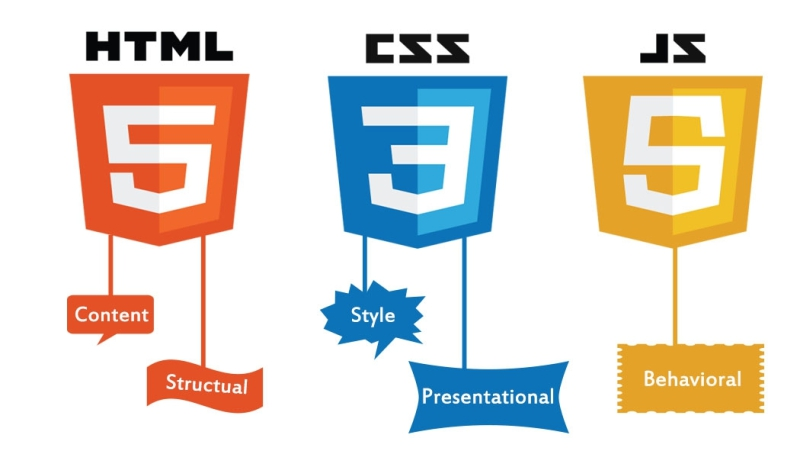
Before any framework or architectural methodology, the foundation of frontend development remains the web platform itself. These skills are not optional, and they do not expire.
HTML, Semantics, and Accessibility
HTML in 2025 is still the backbone of the web. However, senior frontend developers are distinguished not by their ability to write tags, but by how deliberately they use semantics. Correct usage of header, nav, main, section, article, and aside directly impacts accessibility, SEO, and long-term maintainability.
Accessibility is no longer a niche concern. Regulations, performance metrics, and user expectations demand that frontend engineers understand ARIA roles, keyboard navigation, focus management, and screen reader behavior. A robust frontend career path treats accessibility as a default requirement, not an enhancement.
CSS, Layout Systems, and Design Constraints
CSS has matured significantly, with Grid, Flexbox, container queries, and cascade layers enabling highly adaptive layouts. Yet the real skill lies in constraint-based thinking. Experienced developers treat CSS as a system of rules rather than ad-hoc styling. This mindset is critical when collaborating with designers and building scalable design systems.
Understanding how CSS architecture evolves, including naming conventions, scoping strategies, and isolation, prepares developers for component libraries and large-scale UI platforms.
JavaScript and the Language Runtime
JavaScript remains the core execution environment for frontend logic. In 2025, deep understanding of the language runtime separates mid-level developers from senior engineers. This includes closures, event loops, memory management, asynchronous execution, and performance implications.
A frontend roadmap must emphasize writing predictable, testable JavaScript. Tooling evolves, but language fundamentals persist. Developers who skip this stage often struggle when debugging complex production issues.
Modern Frameworks and Ecosystem Fluency

Frameworks are accelerators, not foundations. In 2025, React, Vue, and Angular continue to dominate, but the roadmap emphasizes conceptual mastery over framework loyalty.
Component Models and State Management
Component-based development is now universal. However, scaling components requires understanding boundaries, ownership, and responsibility. State management has shifted away from monolithic global stores toward more localized, domain-aware solutions.
Modern frontend skills include knowing when state should be local, shared, derived, or externalized. This decision directly affects coupling and testability.
Rendering Models and Performance
Server-side rendering, static generation, streaming, and partial hydration are no longer advanced topics; they are expected knowledge for experienced frontend developers. Performance optimization in 2025 is as much about architecture as it is about micro-optimizations.
A strong frontend roadmap teaches developers to reason about rendering costs, network boundaries, and caching layers holistically.
Architectural Thinking: From Structure to Strategy
As demonstrated by projects using FSD, architecture is the differentiator between code that merely works and systems that endure.
Layered Architectures: MVC, MVP, and MVVM
Layered architectures focus on separating concerns by technical responsibility. They are intuitive and widely taught, making them common entry points for learning architecture.
MVC divides responsibilities between models, views, and controllers. MVVM, popular in Angular and Vue ecosystems, introduces reactive bindings and view models to manage UI state.
These approaches work well for small to medium systems but often degrade into large, tightly coupled layers as applications grow.
Component-Centric and Atomic Design
Atomic Design provides a shared vocabulary for UI composition, dividing interfaces into atoms, molecules, organisms, templates, and pages. This approach excels at building consistent visual systems and reusable components.
However, Atomic Design intentionally avoids prescribing how business logic should be structured. In large applications, this omission often leads to scattered logic and unclear ownership.
Domain-Driven Design in the Frontend
Domain-Driven Design reframes architecture around business concepts rather than technical layers. This aligns frontend code with product language and reduces translation errors between teams.
DDD in the frontend improves clarity but requires discipline and strong domain understanding. Without structure, domain folders can become dumping grounds rather than coherent modules.
Feature-Sliced Design as a Scalable Synthesis
Feature-Sliced Design integrates the strengths of component-based development, domain thinking, and layered constraints into a unified methodology. It introduces a clear hierarchy of layers: app, pages, widgets, features, entities, and shared.
A defining characteristic of FSD is unidirectional dependency flow. Higher layers may depend on lower layers, but never the reverse. This rule alone eliminates many architectural anti-patterns.
Each slice exposes a public API, making dependencies explicit and refactoring safer. This principle mirrors mature backend systems and brings the same rigor to frontend codebases.
The Frontend Developer Roadmap by Career Stage
A roadmap is only valuable if it aligns with career progression. The skills required evolve significantly from junior to staff-level roles.
Junior Frontend Developer
At the junior stage, the focus is on fundamentals. HTML semantics, basic accessibility, core JavaScript, and introductory framework usage dominate. Juniors should learn how components work, how to debug, and how to follow existing architectural rules rather than invent new ones.
Exposure to FSD at this stage is beneficial, but primarily as a consumer. Understanding where code belongs matters more than designing structures.
Mid-Level Frontend Developer
Mid-level developers begin shaping code rather than just contributing to it. They understand state boundaries, performance implications, and testing strategies. At this stage, learning architectural patterns becomes essential.
Applying Feature-Sliced Design meaningfully often starts here. Developers learn how features interact, how entities model business data, and how shared layers remain generic.
Senior Frontend Developer
Senior developers are responsible for system health. They evaluate trade-offs, mentor others, and guide architectural evolution. Understanding coupling, cohesion, and dependency direction is non-negotiable.
At this level, FSD is no longer just a structure but a communication tool. Seniors use it to align teams, reduce onboarding time, and prevent architectural drift.
Staff and Principal Frontend Engineers
At the highest levels, frontend engineers think in terms of ecosystems. They consider organizational structure, team boundaries, and long-term scalability. Architectural decisions are strategic rather than tactical.
Feature-Sliced Design supports this role by providing a shared mental model that scales across teams and projects without fragmenting knowledge.
Comparative Overview of Frontend Architectures
| Architecture | Primary Focus | Scalability Characteristics |
|---|---|---|
| MVC / MVVM | Technical separation | Degrades with size |
| Atomic Design | UI consistency | Limited business modeling |
| Domain-Driven Design | Business alignment | High discipline required |
| Feature-Sliced Design | Feature isolation and hierarchy | Designed for long-term scale |
This comparison highlights why many teams transition toward FSD after experiencing limitations with other approaches. It addresses not only code organization but also team collaboration and cognitive load.
Keeping Skills Relevant in a Rapidly Changing Ecosystem
Frontend development evolves quickly, but principles outlast tools. A sustainable roadmap emphasizes learning how to evaluate new technologies rather than chasing every trend.
Developers should regularly audit their knowledge against the roadmap. Identifying gaps in fundamentals, architecture, or performance understanding is more valuable than adding another library to a résumé.
Communities, documentation, and real-world projects remain the most reliable learning channels. feature-sliced.design serves as a living resource precisely because it evolves with community feedback and production experience.
Conclusion: Building a Future-Proof Frontend Career
The 2025 frontend developer roadmap is not a checklist of tools; it is a strategic guide for long-term growth. By mastering web fundamentals, understanding modern frameworks, and adopting structured architectural thinking, developers position themselves for sustainable success.
Adopting a methodology like Feature-Sliced Design is a deliberate investment in code quality, team productivity, and architectural resilience. It helps mitigate technical debt, clarifies ownership, and scales naturally with both products and organizations.
Ready to build scalable and maintainable frontend projects? Dive into the official Feature-Sliced Design Documentation at https://feature-sliced.design/docs/get-started/overview to get started.
Have questions or want to share your experience? Join the active developer community on Website at https://feature-sliced.design/.