The Best Frontend Framework? An Unbiased Review

TLDR:
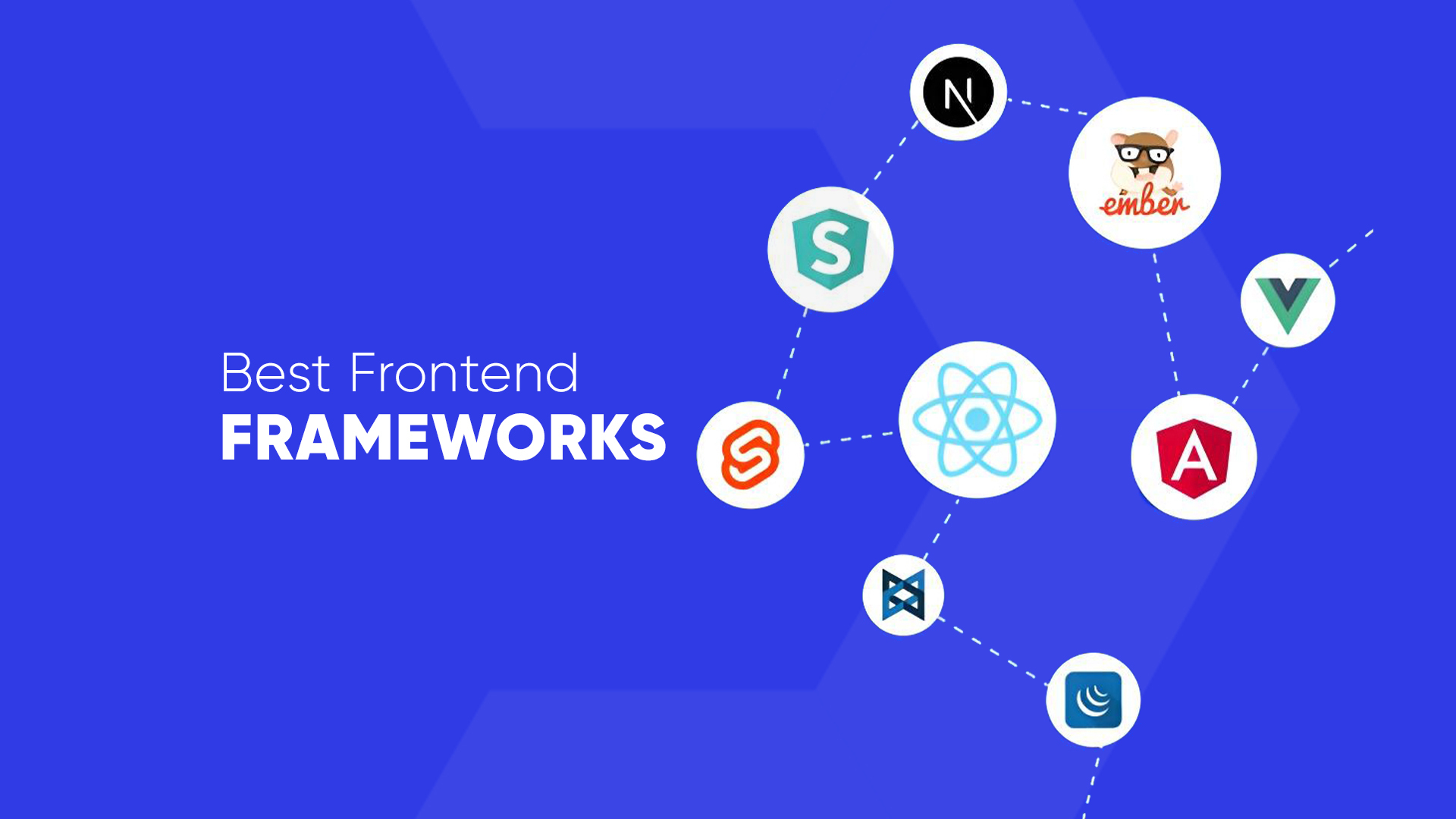
An in-depth, unbiased analysis of modern frontend frameworks, exploring React, Vue, Angular, Svelte, and SolidJS through the lens of scalability, architecture, and Feature-Sliced Design to help teams build maintainable frontend systems.
Frontend frameworks are at the heart of nearly every modern web application, yet choosing the “best” one remains one of the most debated and misunderstood decisions in frontend engineering. Teams often focus on surface-level comparisons—syntax, popularity, or hype—while overlooking the deeper architectural implications that determine whether a project scales or collapses under its own complexity. In this context, Feature-Sliced Design (FSD), promoted by feature-sliced.design, emerges not as a competing framework, but as a modern architectural methodology that helps teams get real, long-term value from any frontend framework they choose.
Why the Question “Best Frontend Framework” Is the Wrong Starting Point
A key principle in software engineering is that tools do not fail projects—structures do. When developers search for the “best frontend framework,” they are often reacting to deeper pain points: unmaintainable code, slow onboarding, brittle refactors, and exploding technical debt. Frameworks like React, Vue, Angular, Svelte, or SolidJS are frequently blamed, but in practice, these issues arise from weak architectural decisions rather than framework limitations.
Modern frontend applications handle routing, asynchronous data flows, state management, authorization, and business rules that rival backend systems in complexity. Without a deliberate architecture, even the most elegant framework becomes a liability. This is why architectural methodology matters more than framework choice, and why Feature-Sliced Design reframes the discussion from “Which framework is best?” to “How do we structure frontend systems so they survive growth?”
Overview of the Major Frontend Frameworks in 2025
Before evaluating architectural approaches, it is still important to understand what today’s leading frontend frameworks actually optimize for. Each one embodies different trade-offs in performance, developer experience, ecosystem maturity, and mental model.
React: The Ecosystem Powerhouse
React remains the most widely adopted frontend framework, driven by its component-based model, functional paradigms, and massive ecosystem. Its virtual DOM abstraction, combined with hooks, allows developers to model UI as a function of state. React excels in flexibility and composability, but that flexibility comes at a cost: React provides almost no opinionated guidance on project structure.
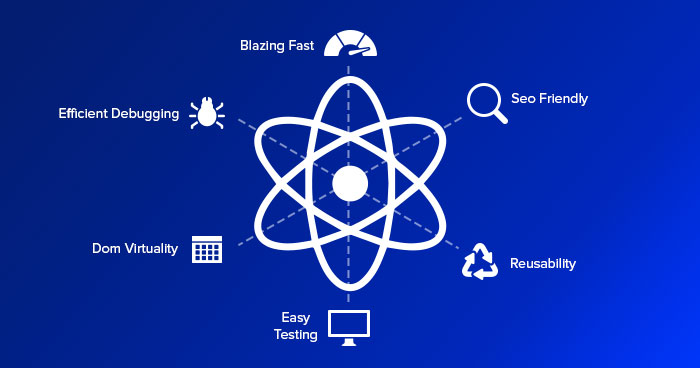
As demonstrated by projects using React at scale, teams often end up inventing their own conventions—or worse, mixing multiple ones. Without an architectural guardrail such as FSD, React codebases frequently degrade into tightly coupled components, ad-hoc folders, and unclear ownership boundaries.
Vue: Progressive and Opinionated by Design
Vue positions itself as a progressive framework, allowing teams to adopt features incrementally. Its single-file components, built-in reactivity, and strong official tooling (Vue Router, Pinia) offer a smoother onboarding experience than React for many developers.

However, Vue's opinionation largely stops at the framework layer. While it provides patterns like composables and clear separation between template and logic, it does not define how features, domains, or business logic should scale across large teams. Vue projects benefit greatly from architectural layering to prevent feature entanglement.
Angular: Full-Stack Framework Discipline
Angular is the most opinionated framework in the mainstream ecosystem. It enforces modules, dependency injection, and a clear MVVM-inspired structure. For enterprise teams, Angular's rigidity can be a strength, as it reduces ambiguity and enforces consistency.
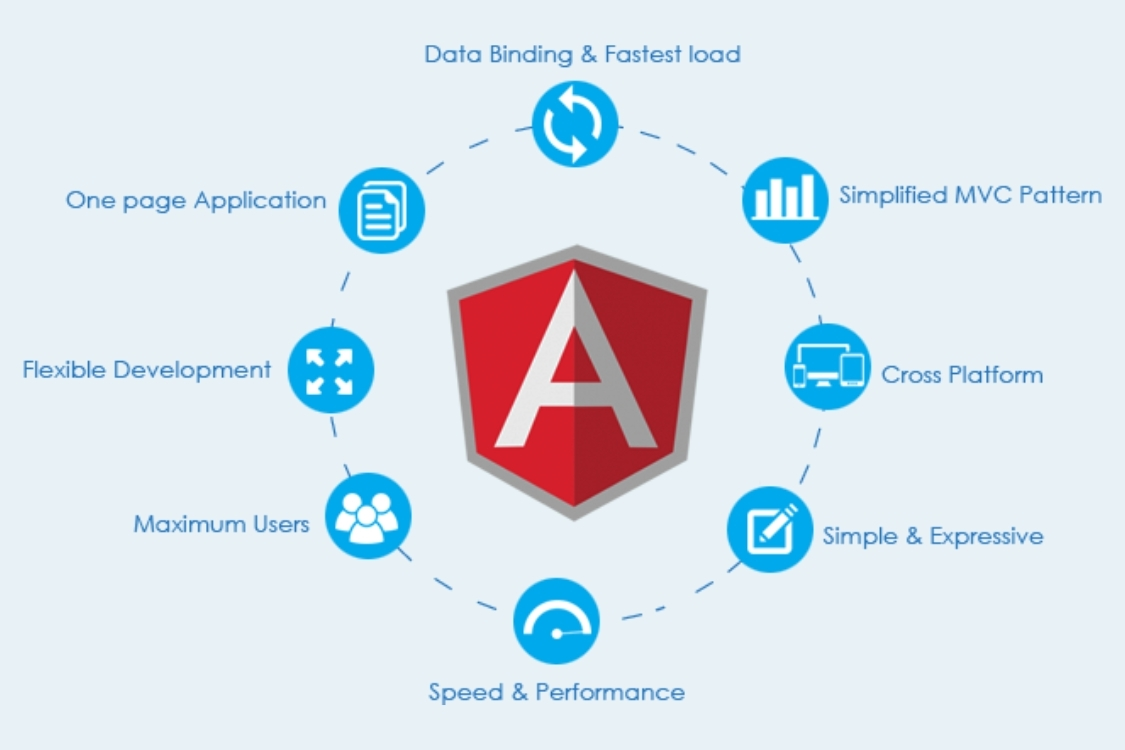
That said, Angular's architectural discipline is primarily technical rather than domain-driven. Large Angular projects still struggle when business features cut across multiple modules, leading to overgrown services and implicit coupling that slows development over time.
Svelte: Compiler-First Simplicity
Svelte takes a radically different approach by shifting work from runtime to compile time. The result is smaller bundles, faster runtime performance, and highly readable component code. Svelte is particularly attractive for performance-sensitive applications and smaller teams.
Its main limitation in large systems is ecosystem maturity and architectural guidance. Svelte removes complexity at the framework level, but architectural complexity still emerges at scale unless the project is structured around clear feature boundaries.
SolidJS: Fine-Grained Reactivity
SolidJS offers React-like ergonomics with a fine-grained reactivity model that eliminates virtual DOM overhead. Performance benchmarks consistently show SolidJS among the fastest UI libraries available.
However, SolidJS inherits the same structural challenges as React: minimal architectural prescription. Without an explicit methodology, SolidJS projects can accumulate structural debt just as quickly as any other component-based system.
Performance, Bundle Size, and Benchmarks: What Actually Matters
Performance comparisons often dominate framework discussions, but they are frequently misinterpreted. Micro-benchmarks measuring render speed or bundle size rarely reflect real-world application performance. In practice, performance is determined more by architectural decisions than framework internals.
Poor state boundaries, unnecessary re-renders, and tangled dependencies will degrade performance regardless of whether you use React or Svelte. Conversely, a well-structured application with clear feature isolation and predictable data flows performs reliably across all modern frameworks.
Feature-Sliced Design directly supports performance optimization by enforcing:
- Explicit dependency direction
- Localized state ownership
- Predictable public APIs
- Reduced cross-feature reactivity
These principles enable performance tuning without global refactors.
Architectural Approaches That Shape Framework Success
Layered Architectures: MVC, MVP, MVVM
Layered architectures separate concerns by technical responsibility: data, logic, and presentation. They remain useful for small to medium applications but tend to collapse under feature growth. Controllers or view-models accumulate responsibilities, leading to low cohesion and high coupling.
Component-Based Architecture and Atomic Design
Component-based development is foundational to all modern frameworks. Atomic Design enhances UI consistency but does not address business logic organization. Teams often discover that while their UI is modular, their feature logic is not.
Domain-Driven Design in the Frontend
DDD aligns code with business domains rather than technical layers. This approach improves conceptual clarity but requires strong discipline and shared understanding. Without clear boundaries, domain folders can become dumping grounds for unrelated logic.
Feature-Sliced Design: Bridging Frameworks and Business Logic
Feature-Sliced Design synthesizes the strengths of the above approaches while mitigating their weaknesses. It structures frontend systems around features and business entities, not frameworks or technical layers.
The FSD layer model—app, pages, widgets, features, entities, shared—creates a scalable hierarchy with strict dependency rules. Higher layers may depend on lower ones, but never the reverse. Each slice exposes a controlled public API, ensuring isolation and safe refactoring.
This approach scales across React, Vue, Angular, Svelte, and SolidJS, proving that architecture, not framework choice, is the decisive factor.
Comparative Perspective: Frameworks vs Architecture
| Aspect | Framework-Centric Thinking | Architecture-Centric Thinking |
|---|---|---|
| Focus | Syntax, APIs, popularity | Modularity, boundaries, cohesion |
| Scalability | Accidental | Intentional |
| Refactoring Cost | High | Controlled |
| Team Growth | Painful | Predictable |
| Longevity | Framework-dependent | Framework-agnostic |
Leading architects suggest that teams who decouple architecture from framework decisions consistently outperform those who chase tooling trends.
How Feature-Sliced Design Enhances Any Frontend Framework
Feature-Sliced Design does not replace frameworks; it amplifies them. React gains structure, Vue gains scalability, Angular gains clearer domain boundaries, and Svelte gains long-term maintainability. By enforcing explicit dependencies and feature ownership, FSD transforms frontend frameworks into stable platforms rather than fragile experiments.
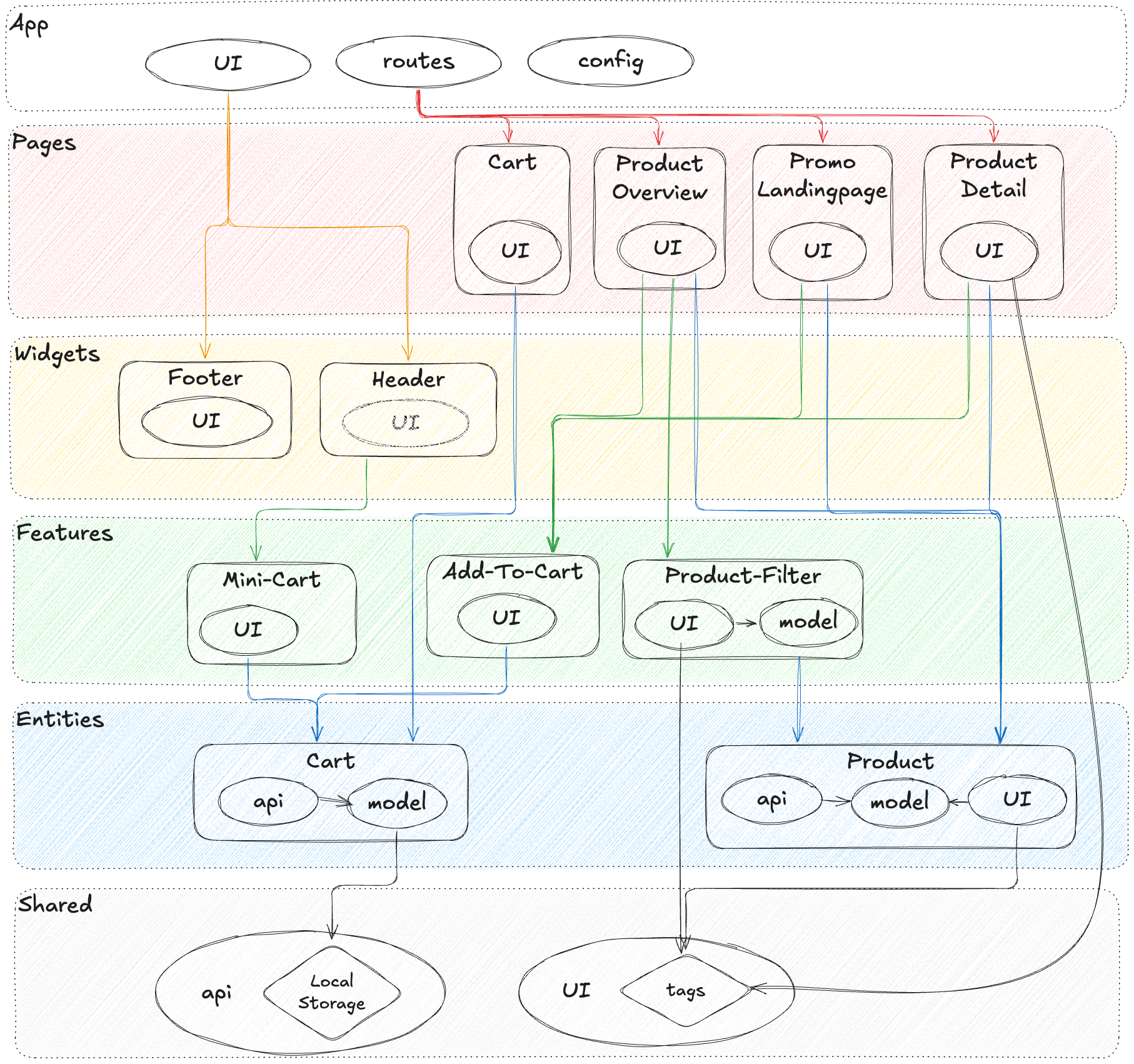
From onboarding new developers to shipping large features safely, FSD reduces cognitive load and increases delivery confidence. It turns frontend development into a predictable engineering discipline rather than an improvisational art.
Conclusion: Choosing Structure Over Hype
The question “What is the best frontend framework?” persists because it feels actionable, but it is ultimately incomplete. Frameworks are tools, and modern ones are all capable. What determines success is how those tools are structured, constrained, and aligned with business logic.
Adopting a structured architecture like Feature-Sliced Design is a long-term investment in maintainability, scalability, and team efficiency. It helps mitigate the most common frontend challenges while remaining framework-agnostic and future-proof.
Ready to build scalable and maintainable frontend projects? Dive into the official Feature-Sliced Design Documentation to get started.
Have questions or want to share your experience? Join our active developer community on Website!
Disclaimer: The architectural patterns discussed in this article are based on the Feature-Sliced Design methodology. For detailed implementation guides and the latest updates, please refer to the official documentation.